

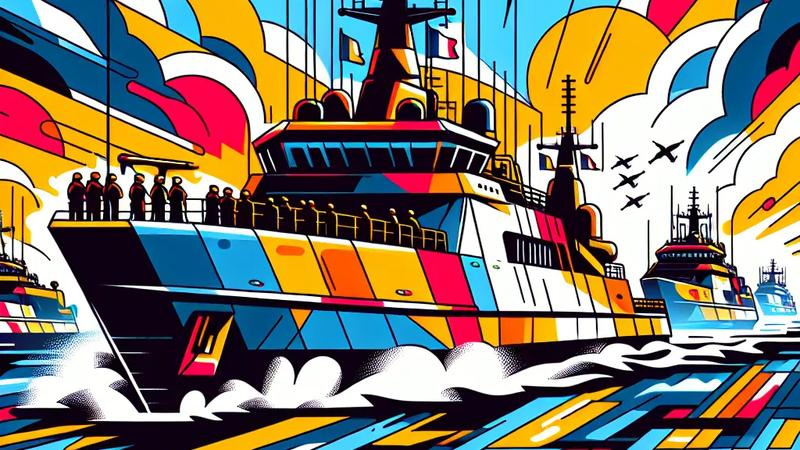
In a significant step towards bolstering its naval capabilities, France has launched the first of its planned seven new offshore patrol vessels (OPVs), marking a strategic shift in its approach to maritime security and defense. This initiative underscores France’s commitment to enhancing its maritime presence and addressing emerging security challenges. The launch is part of a broader effort to modernize the French Navy and maintain a robust maritime force capable of safeguarding national interests in increasingly contested waters.
The new class of OPVs, known as the Patrouilleur d'Outre-mer (POM), is specifically designed to operate in France’s expansive overseas territories. These areas include the Caribbean, the Indian Ocean, and the Pacific, where territorial waters are vast and the need for effective surveillance and maritime law enforcement is critical. The POM vessels are expected to replace the aging P400-class patrol boats that have been in service since the 1980s.
Technical Specifications and Capabilities
The POM vessels are at the forefront of naval technology, featuring advanced systems designed to improve operational efficiency and effectiveness. Each vessel is approximately 80 meters long and displaces around 1,000 tons, providing a balance between speed, maneuverability, and endurance. These ships are equipped with state-of-the-art navigation and communication systems, as well as a suite of sensors and surveillance equipment to enhance situational awareness.
Armament includes a 20mm remote-controlled gun and several machine guns, allowing these vessels to engage in a variety of missions, from counter-piracy operations to humanitarian assistance. Importantly, the POM vessels can also carry a helicopter or drones, significantly extending their operational range and versatility. The integration of unmanned systems allows for enhanced reconnaissance capabilities, critical in vast oceanic expanses.
Strategic Implications
The introduction of these new OPVs has significant strategic implications for France and its allies. As global tensions continue to rise, particularly in regions like the Indo-Pacific, having a modern and capable maritime force is crucial. The presence of these patrol vessels will not only enhance France's ability to project power and influence across its overseas territories but also contribute to international efforts in maintaining maritime security.
The POM vessels are expected to play a vital role in various missions, including anti-smuggling operations, fisheries protection, and disaster relief. These missions are crucial in asserting France's sovereignty over its territorial waters and Exclusive Economic Zones (EEZs), which are among the largest in the world. Additionally, the vessels will support France’s commitments to international maritime security, including combating illegal, unreported, and unregulated fishing, which has significant economic and environmental impacts.
Industry and Economic Impact
The construction of these vessels is a significant boost to France’s domestic shipbuilding industry, providing jobs and supporting local economies. The project is managed by Naval Group, a major player in the global defense industry, known for its expertise in designing and building advanced naval vessels. The involvement of local industries in the supply chain underscores the importance of maintaining a strong domestic defense industrial base, which is critical for national security and technological sovereignty.
Furthermore, the development of the POM vessels represents a strategic investment in innovation and technology. The use of cutting-edge materials and systems in these ships places France at the forefront of naval design, potentially opening up export opportunities in the future. Countries with similar maritime needs may look to France as a model, providing potential avenues for defense cooperation and economic partnerships.
Global Context and Future Prospects
The launch of the first POM vessel comes at a time when many countries are reassessing their maritime strategies. The growing importance of securing sea lanes and maritime boundaries has led to increased investments in naval capabilities worldwide. For France, the POM vessels are more than just patrol ships; they are a symbol of its commitment to maintaining a modern, capable navy that can respond to both traditional and non-traditional security threats.
Looking ahead, France’s investment in these vessels could have broader implications for its role in global maritime security. As part of NATO and the European Union, France is a key player in maintaining stability in regions of strategic importance. The capabilities provided by the POM ships enhance France’s ability to contribute to multinational operations, whether in the Mediterranean, the Atlantic, or the Pacific.
In conclusion, the launch of the first of seven new offshore patrol vessels marks a significant milestone in France's naval modernization efforts. These vessels are set to play a crucial role in safeguarding France's maritime interests while contributing to global security efforts. As they take to the seas, these modern patrol vessels will undoubtedly enhance France's ability to meet the challenges of the 21st-century maritime environment.