







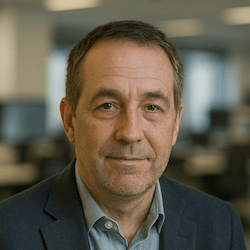


Tokenization has the potential to open up various asset classes to a wider audience, but liquidity remains a crucial element for its success, according to Carlos Domingo, co-founder and CEO of Securitize. While tokenization might allow someone from another country to own part of a Manhattan property, the ease of selling such an asset is often underestimated.
When digital representations of real-world assets were first explored, it became evident that technology alone doesn't guarantee quick sales at stable prices, Domingo explained in a conversation with Decrypt. He emphasized that liquidity is as vital as accessibility for any asset class. Many assumed tokenization would transform illiquid assets into liquid ones, but this has not materialized because an asset's illiquidity persists regardless of its digital form.
Domingo pointed out that digital assets, whether they represent shares in real estate or tokenized collectibles like Pokémon cards, still suffer from the same illiquidity issues as their physical versions. This means these assets could be challenging to sell swiftly without a value loss. While this scenario might change as tokenization technology evolves, the current focus is on assets with existing liquidity, such as cash and U.S. Treasuries.
Domingo noted that the most successful tokenized asset is arguably the dollar, as evidenced by the significant growth of stablecoins. These digital currencies, often underpinned by cash and government securities, have carved out a $300 billion niche in the crypto sector. Tokenized U.S. Treasuries have also seen substantial growth, far surpassing tokenized stocks, with valuations of about $9 billion compared to $681 million, respectively.
Securitize is actively bringing tokenization to Wall Street, having played a role in issuing BlackRock's USD Institutional Digital Liquidity Fund (BUIDL). This money market fund, which operates across multiple blockchains, has reached $2 billion in value since its launch last March.
In an article for The Economist, BlackRock's CEO Larry Fink and COO Rob Goldstein discussed tokenization's capacity to vastly increase the scope of investable assets, especially in emerging markets. Although asset classes like real estate are currently dominated by large institutions, BlackRock's executives suggested that smaller, more accessible investment units could democratize access to these markets.